
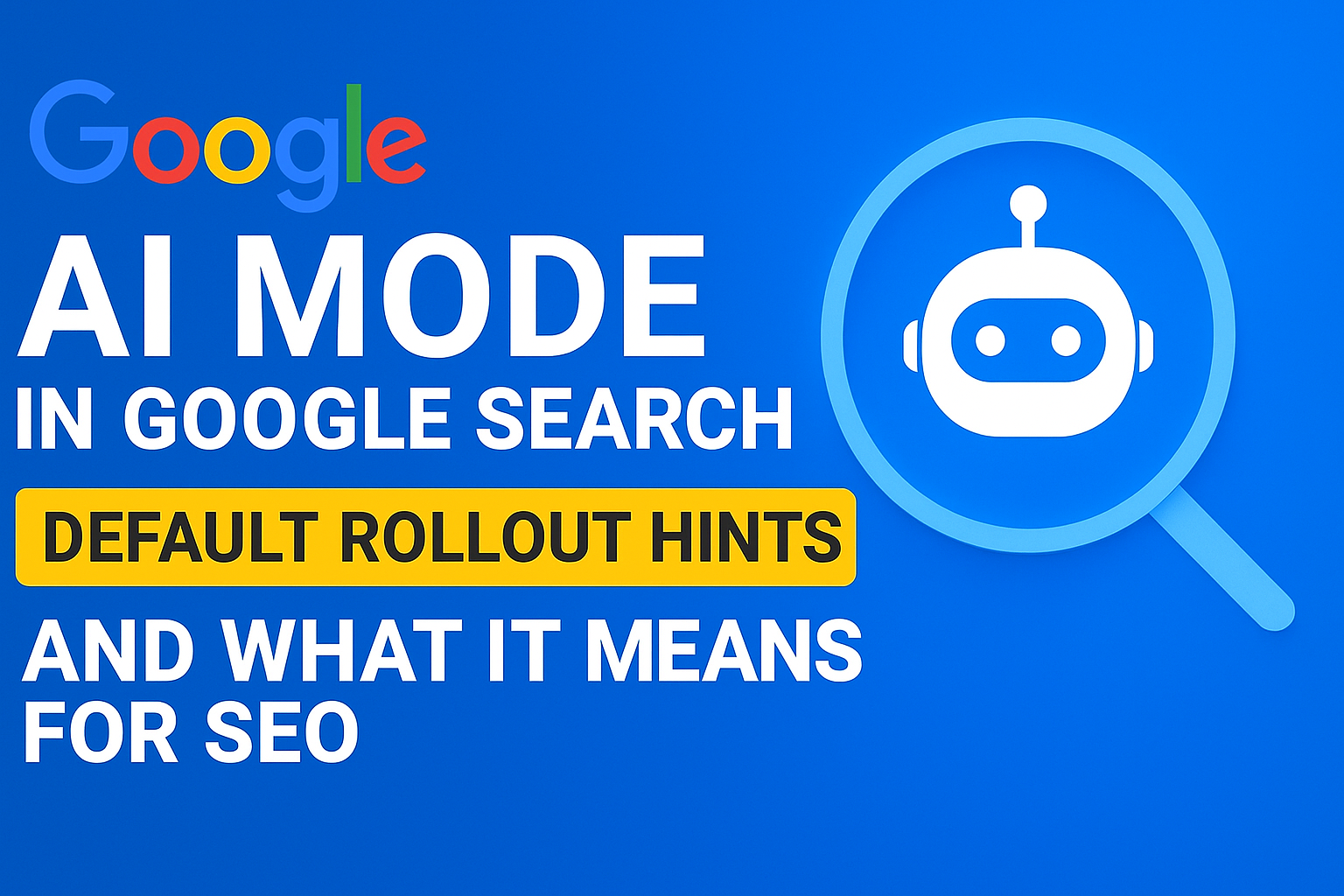
Logan Kilpatrick, lead product manager at Google, hinted that AI Mode may soon become the default option in Google Search. Hours later, another Google executive downplayed the statement, saying users should not read too much into it. The mixed signals raise new questions about how quickly AI Mode will replace the traditional search interface.
Google’s Hint at Default AI Mode
On Friday, Kilpatrick replied to a post on X asking when AI Mode would become the default Google Search view, responding with just one word: “Soon.”
This echoes earlier comments from Liz Reid, Google’s head of Search, who said in May 2025 that AI Mode is the future of Google Search. Kilpatrick’s response suggests that rollout may happen sooner than expected.
Shortcut to AI Mode
The timing coincides with a new shortcut: google.com/ai now takes users directly into AI Mode. Previously, users had to load Google.com and manually select the AI Mode tab.
Why This Matters
Google has expanded AI Mode rapidly across 180 countries and territories, including recent launches in the UK, India, and the US. Making it the default could fundamentally shift how billions of people search online.
What Is AI Mode?
AI Mode is a new tab within Google Search designed to handle queries that require reasoning, comparisons, or deeper analysis. It uses a “query fan-out” method, which runs multiple related searches simultaneously across subtopics and data sources, then consolidates results into a single response.
The tool supports text, voice, and image queries, while also allowing conversational follow-up questions similar to AI Overviews and Gemini.
Tracking AI Mode Performance
SEO professionals face a challenge: Search Console does not clearly separate AI Mode queries from traditional searches. While the data is logged, it is combined with standard search metrics, making reporting inconsistent. With AI Mode expanding beyond Search Labs in India, this issue is expected to grow.
Implications for SEO
If AI Mode becomes the default, it could reshape how search traffic flows to websites. Marketers and SEOs will need to adapt strategies quickly, test new approaches, and experiment with ranking visibility in this new environment. Complaining about the shift won’t change it—adapting to it will.
SEO isn’t going away, but those who fail to adjust could see their relevance fade. The good news: SEO professionals have a strong track record of adapting to algorithm changes and platform shifts, putting them in a good position for what’s next.
Google Pushes Back on Default Rumors
Later in the day, Robby Stein, VP at Google, responded to the speculation. He wrote, “Wouldn’t read too much into this. We’re focusing on making it easy to access AI Mode for those who want it.”
This suggests Google may continue expanding AI Mode availability without immediately replacing the traditional search interface for all users.