
A small business owner in Lahore sends a WhatsApp message to 400 contacts with a link to her new product page. She gets 80 replies saying "looks great." But her actual sales? Eleven. She has no idea whether 400 people clicked the link or 12. She does not know if most traffic came from WhatsApp, Instagram, or the email she sent the same day. She is making decisions on gut feel because the link she shared was a plain URL that tracked nothing.
This is the default situation for most people who share links online. And it is completely fixable without writing code or paying for software.
Here is the full breakdown of how to track who clicked your link, what data you can realistically collect, and how to read that data to make better decisions.
What "Tracking Who Clicked Your Link" Actually Means
Let's be precise about this. You cannot see the name or email address of the person who clicked your link unless they are logged into a system you control. What you can see is behavioral and technical data attached to each click.
| Data Point | What It Tells You | Practical Use |
|---|---|---|
| Country / City | Where the click originated, based on IP address | Know which regions your audience is in |
| Device Type | Mobile, desktop, or tablet | Decide whether your landing page needs mobile optimization |
| Browser | Chrome, Safari, Firefox, etc. | Check for compatibility issues if conversion rates are low |
| Referrer | Where the click came from: WhatsApp, Instagram, direct, email | Know which channel is actually driving traffic |
| Timestamp | Date and time of each click | Find your best posting time with real data |
| Operating System | iOS, Android, Windows, macOS | Useful for app deep linking decisions |
That is six data points per click, available on every link you create with Trimrly. No code. No SDK. No third-party integration required.
How to Track Who Clicked Your Link in 4 Steps
The process is straightforward. Here is exactly what to do.
Create a free Trimrly account
Go to trimrly.com/user/register. No credit card. Takes about 30 seconds. The free plan gives you 50 tracked short links per month with full analytics on all of them.
Paste your long URL and shorten it
Copy whatever URL you want to share: a product page, a Google Form, a PDF, a booking link. Paste it into the shortener at trimrly.com. Click shorten. You get a short link immediately.
Share that short link everywhere
Use the Trimrly short link wherever you would have shared the original URL: WhatsApp, Instagram bio, email, printed flyers, SMS. Every click on that short link is recorded automatically from this point forward.
Open your analytics dashboard
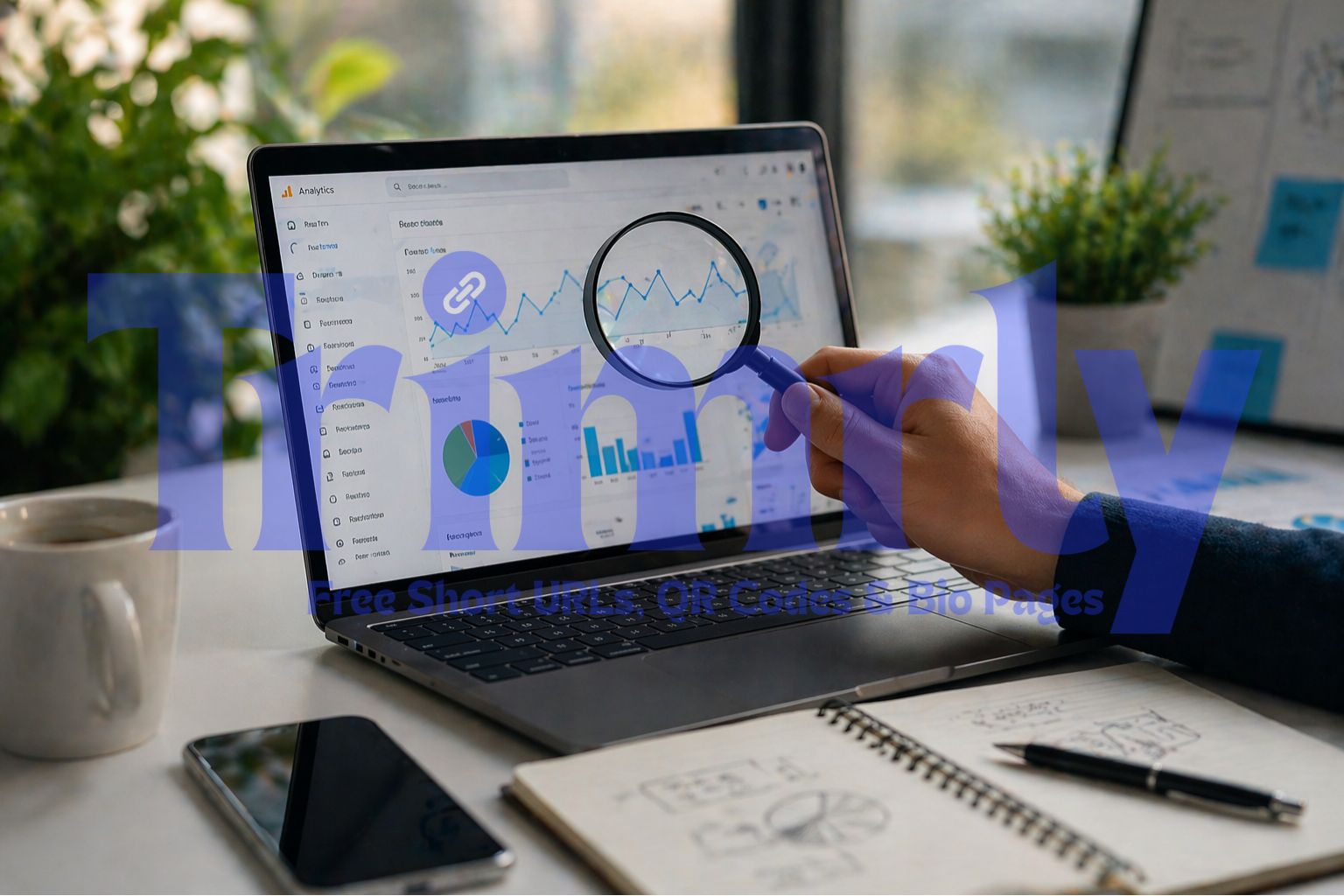
Log in to your Trimrly account and click on any link to see its stats. You will see total clicks, clicks over time, a country breakdown, device split, referrer sources, and browser data. All updated in real time.
Your analytics start collecting from the moment you share the short link. Clicks on the original long URL before you created the short link are not tracked. Going forward, always share the short version.
Reading Your Click Data: What to Actually Look For
Most people open their analytics dashboard, see a number, feel satisfied, and close the tab. That is the wrong way to use this data.
Here is what to actually pay attention to:
Referrer data: this is your most valuable metric
Referrer tells you where clicks are coming from. If you shared the same link on Instagram, WhatsApp, and in an email newsletter on the same day, referrer data shows you which channel sent the most traffic. This is how you stop guessing and start knowing which platforms are worth your time.
A content creator who uses Trimrly for all their shared links often discovers that 70% of their traffic comes from one platform they assumed was their weakest channel. That single insight changes where they post first and how much time they spend on each platform.
"Referrer data does not just show where clicks came from. It shows where your actual audience lives."
Device split: mobile vs desktop
If 85% of your clicks are coming from mobile users and your destination page loads slowly on mobile, you have a conversion problem that has nothing to do with your copy or your offer. Device data makes this visible. Without it, you would keep tweaking the wrong thing.
Country breakdown: who is actually in your audience
This one surprises people regularly. You might be targeting one country but getting significant traffic from two or three others. That is either an opportunity (localize your content for those markets) or a signal that your targeting on paid platforms needs adjustment.
Click timing: when your audience is active
The timestamp on each click, when looked at across 20 or 30 links over a few weeks, shows you a pattern. Your audience clicks most between 7 PM and 9 PM on weekdays. Or 11 AM on Saturdays. Post at that time and your click rate improves without changing anything else.
Start Tracking Every Click for Free
50 short links per month. Full analytics. No credit card. No expiry on your links or your data.
Common Mistakes That Break Your Click Tracking
Getting the setup right is simple, but a few easy mistakes will give you incomplete or misleading data.
- ✕
Sharing both the short link and the original URL. If you post the short link on Instagram but paste the original URL in your email newsletter, half your clicks are invisible. Pick one and use it everywhere for that campaign.
- ✕
Creating a new short link every time you share. If you create a different short link for each share, your data is fragmented across multiple links. Create one short link per destination URL and share that same link across all your channels.
- ✕
Not checking referrer data after each campaign. The data is only useful if you act on it. Check your referrer breakdown within 48 hours of a campaign going live, while you still have context for what you shared and where.
- ✓
Creating separate short links for separate campaigns. One link for the Instagram post, a different one for the email, a third for the printed flyer. This way, referrer data tells you exactly which channel performed without any ambiguity.
- ✓
Using custom aliases for important links. Instead of a random string like trimrly.com/abc123, give your link a readable alias like trimrly.com/summer-sale. It builds trust with your audience and makes your analytics dashboard much easier to read at a glance.
Tracking Links Beyond Simple Clicks: QR Codes and Bio Pages
Short link analytics are the starting point. But if you are sharing links in more than one format, there are two other tracking tools worth knowing about.
QR code click tracking
Every QR code you create with Trimrly is actually a short link in disguise. The QR code points to a Trimrly redirect, which means every scan is tracked with the same data: country, device, time, and referrer. Print QR codes on flyers, menus, packaging, or event signage and you can see exactly how many people scanned them, when, and from what city.
A restaurant in Karachi put a Trimrly QR code on their takeaway bags linking to a feedback form. Within two weeks they had 340 scans tracked, with data showing that 80% happened on weekday evenings, and that most scanners were in a 3 km radius of the restaurant. That is useful data from a sticker on a paper bag.
Bio page click tracking
If you use a Trimrly bio page as your Instagram or TikTok link in bio, every link inside that bio page is individually tracked. You can see which button gets clicked most: Spotify, your shop, your booking link, or your YouTube. That tells you what your audience wants most, which is the exact right information for deciding what to create next.
QR code and bio page analytics are included in the same free Trimrly account as your short link analytics. One dashboard, all three tracked in the same place.
Frequently Asked Questions
No link shortener can tell you the name or email address of an anonymous visitor. What you can see is their country, device, browser, operating system, the platform they clicked from, and the timestamp. To identify specific people by name, you would need them to be logged in to a system you control, such as a CRM or email platform.
Yes. Trimrly's free plan includes full click analytics on all 50 links per month. You get country, device, browser, referrer, and timestamp data on every click. Analytics are stored permanently with no 30-day expiry. No credit card is required to access this data.
Trimrly captures the referrer automatically for each click. When someone clicks your link from Instagram, WhatsApp, a browser, or an email client, the referrer data shows you the source. For more precise channel tracking across a single campaign, create one unique short link per channel so referrer data stays clean and separated.
If you shared a plain URL without a shortener, those past clicks are not recoverable. Going forward, shorten the link with Trimrly and share the short version. All clicks from that point are tracked. If you shared a Trimrly short link and want to see its historical data, that is already in your dashboard since Trimrly stores analytics permanently.
No. Trimrly link tracking works at the redirect level, meaning click data is captured before the visitor reaches your website. You do not need to add any code, pixel, or script to your destination page. The tracking happens on Trimrly's side, automatically, for every link you shorten.