
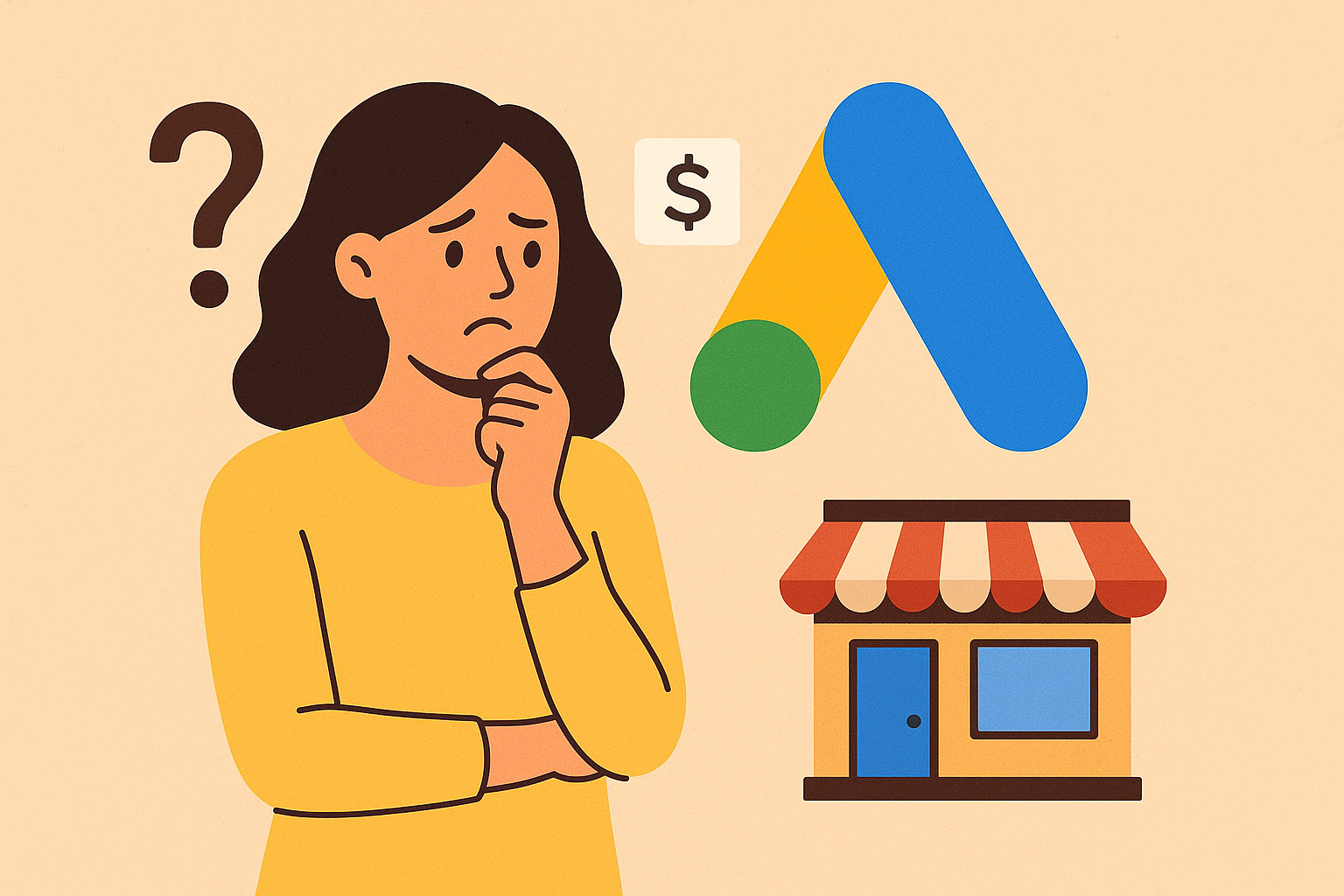
Talk to almost any small business owner who’s tried Google Ads recently, and you’ll hear a mix of frustration and doubt. “The clicks are too expensive.” “It feels like only the big guys can win now.”
They’re not wrong. Search results are crowded with household names and national chains that can outspend almost anyone. For a small or mid-sized business, it can feel like showing up to a boxing match two weight classes too high. A recent poll backs this up: more than half of small business owners said they feel priced out of Google Ads altogether.
But here’s the twist: being small isn’t the end of the story. With the right focus, small businesses can still carve out their share of the market. The trick isn’t to spend more. It’s to spend smarter.
The Roadblocks Small Businesses Face
Rising Costs That Squeeze Every Dollar
This is the pain point nearly everyone talks about first. Cost-per-click (CPC) keeps climbing. A keyword that cost $2 or $3 a couple years ago might run two or three times that today.
Big brands can shrug it off. They just bump up budgets and keep rolling. But for a bakery, roofing contractor, or boutique law firm, that same jump might mean cutting campaigns in half. Suddenly, what used to bring in steady traffic only delivers a trickle.
Data Disadvantages That Slow Growth
Google’s automation is powerful, but only if it has enough data to work with. Smart bidding strategies, audience signals, and Responsive Search Ads all improve as campaigns feed in more clicks and conversions.
That’s where smaller advertisers hit a wall. With modest budgets, their accounts gather data slowly. What takes a large brand two weeks to optimize might take a small business two months. And many don’t have the luxury of waiting that long to see results.
The Complexity Problem
Running Google Ads well isn’t easy. From picking the right match types to structuring campaigns and setting bid strategies, there’s a lot to juggle. Big brands hire teams or agencies to handle it.
Small businesses? Often it’s the owner squeezing in ad management between sales calls and payroll. Without expertise, it’s easy to waste money on broad matches, bad keywords, or campaigns that never reach their potential.
The Awareness Gap
Even when a smaller company has the better product or service, name recognition still matters. Users scanning search results are more likely to click the brand they recognize. That trust translates into higher click-through and conversion rates for large advertisers.
For small businesses, every click has to do double duty: introduce the brand and persuade the customer to buy. It’s an uphill climb.
How Small Businesses Can Still Win on Google Ads
Here’s the good news: none of these challenges mean small businesses are doomed. They just have to approach Google Ads differently. As PPC strategist Hana Kobzová says: “Small businesses don’t need to outspend, they need to outsmart.”
1. Go After the Right Traffic, Not Just More Traffic
Chasing volume is a trap. What really matters is attracting people who are the best fit for your product or service.
For example, a wedding caterer shouldn’t waste money on broad “catering” searches. That could bring in clicks from office managers or birthday party planners — the wrong audience. Instead, the focus should be on phrases like “wedding catering packages” or “wedding reception caterer near me.”
Fewer impressions? Absolutely. But the clicks that do come through are more likely to convert, which means more revenue from the same budget.
2. Track What Really Matters
Without conversion tracking, campaigns are basically blind. And small businesses can’t afford to fly blind.
This means setting up proper tracking with Google Tag Manager, GA4, or even offline conversions. Knowing which ads, keywords, or campaigns actually drive leads or sales lets businesses shift budget to what works. It’s the difference between guessing and growing.
3. Build Strong Ads Without Big Budgets
Here’s some relief: creative no longer has to eat half the budget. Google’s Asset Studio makes it possible to create images and videos directly inside the platform.
That said, cheap doesn’t mean sloppy. Ads still need to reflect brand identity. If a local florist puts out visuals that look nothing like their actual brand, customers will sense the disconnect. Authenticity always wins.
Beyond Google: Other Platforms to Consider
For some businesses, competing on Google Ads is only part of the equation. Other platforms can deliver strong results too:
Microsoft Advertising: Often less expensive, with clicks that cost 20–40% less in certain industries. It’s particularly effective for professional services and businesses targeting older audiences.
Social Ads: Meta, TikTok, and even LinkedIn can help small businesses reach highly engaged users in different contexts. These platforms allow for strong audience targeting and, in many cases, lower costs.
Diversifying ad spend spreads risk and prevents over-reliance on Google’s ever-changing auction.
The Bottom Line
Google Ads isn’t an easy playground for small businesses anymore. Rising costs, slow data growth, and the awareness gap make it a tough fight against the big players.
But smaller brands still have a shot by narrowing their focus, tracking performance religiously, and using creative tools to stretch their dollars further.
The truth is, competing as a small business on Google Ads won’t ever be about having the deepest pockets. It’s about making smarter moves with the resources you already have.