
Google’s former search liaison reinforced that SEO is still about building content that helps people. He also addressed growing concerns about declining clicks since AI Overviews launched.
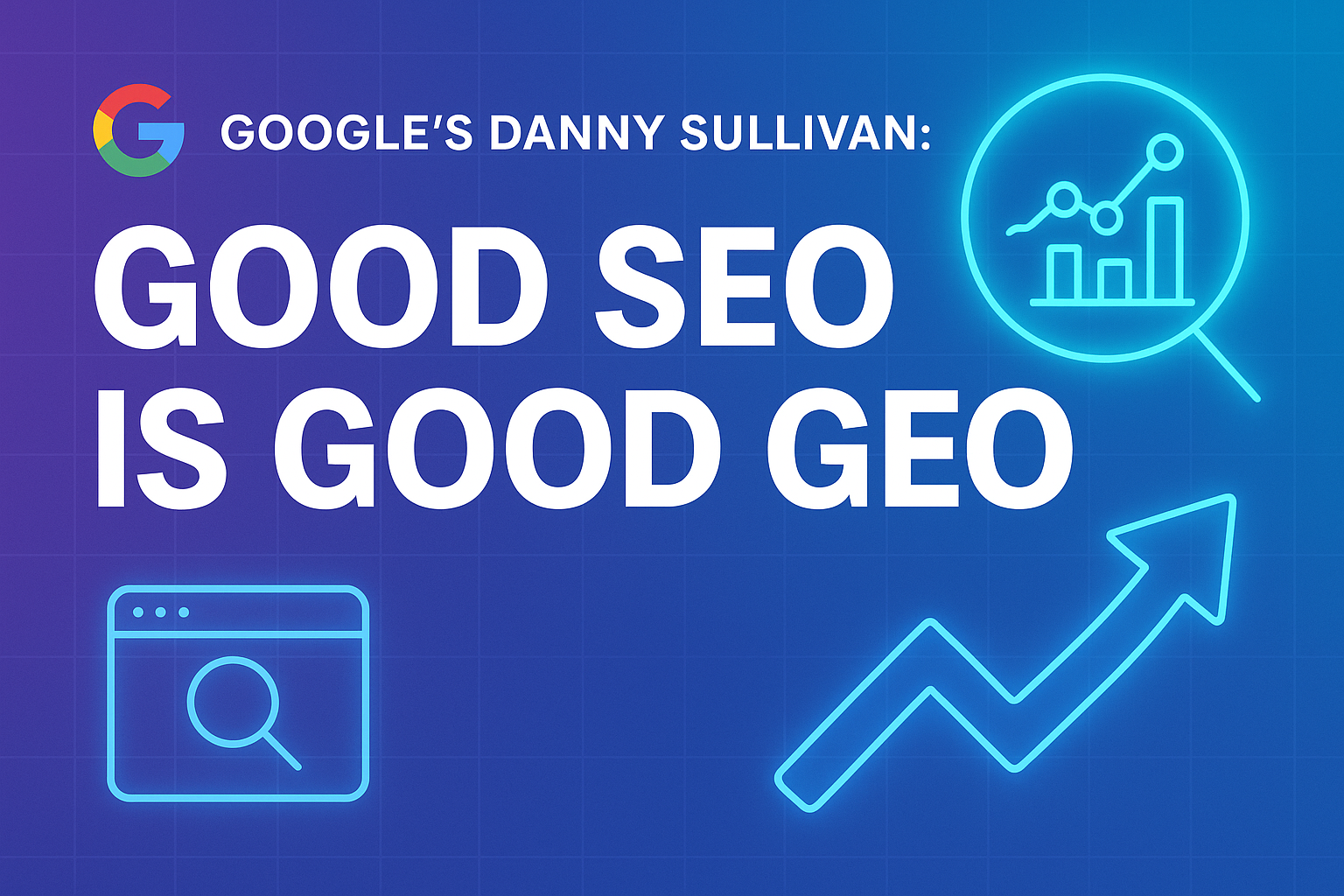
“Good SEO is good GEO.” That’s the message from Danny Sullivan, a director within Google Search and a former search liaison.
Generative engine optimization (GEO) – or whatever acronym gets used for AI-driven search – relies on the same principles SEOs have always followed: creating original, useful content and delivering a solid page experience.
This aligns with Google’s Gary Illyes’ reminder in July that normal SEO still works.
Why It Matters
Google insists that SEO remains the foundation, even as AI search expands. GEO may feel like an emerging concept, but it doesn’t replace SEO fundamentals. Many agree with Michael King’s view that SEO is moving toward being “deprecated” as AI shifts from ranking pages to delivering answers. Regardless, quality content remains the core factor.
What Sullivan Said
During his keynote at WordCamp US on Aug. 28, Sullivan explained why SEOs shouldn’t panic over shifting acronyms or AI-driven changes:
“If you don’t know what GEO is, it’s the latest acronym, but tomorrow there will be another one. SEO, search engine optimization; GEO, generative engine optimization.
Back in 2010, when people panicked, I said SEO isn’t just about getting blue links in Google. SEO means understanding how people search and ensuring your content is there—whether it’s typed into a search box, asked through voice, or opened on a phone.
The basics haven’t changed. Good SEO is good GEO, or AEO, AIO, LLM SEO—whatever. Don’t panic. What you’ve been doing for search engines is still right: create content that’s helpful for people.
Write clearly so people can understand. Write about things that are unique or interesting. That’s what benefits people. Google’s job is to align signals with content that serves people.”
The CTR Question
During Q&A, blogger Angie Drake said her organic click-through rate has dropped sharply since AI Overviews appeared, even though impressions increased—a trend some call the “great decoupling” of search. She asked how Google would support publishers losing traffic.
Sullivan’s response included:
Google has always provided zero-click factual answers (like “What time is the Super Bowl?”) because users expect direct responses.
The company is committed to rewarding original, valuable content while keeping the open web strong.
He acknowledged “bumps along the way,” said publisher feedback is heard, and confirmed Google is still working on solutions.
Other Key Takeaways
Sullivan also shared several insights:
Google AI Overviews have resulted in a 10% increase in searches in the U.S. and India.
Google makes up to 5,000 search launches/updates each year. The latest figure is nearly the same as 2022 (4,725).